Walking Past Horror: Concentration Camps, American Detention, and The Cost of Looking Away

Something is happening right now that most of us are not looking at directly—not because the information is hidden, but because looking is uncomfortable, and we have built efficient systems for avoiding discomfort.
This is about those systems: who built them, who profits from them, what they cost you, and what history says happens when ordinary people decide it isn’t their problem.
It is our problem. The time to say so is now.
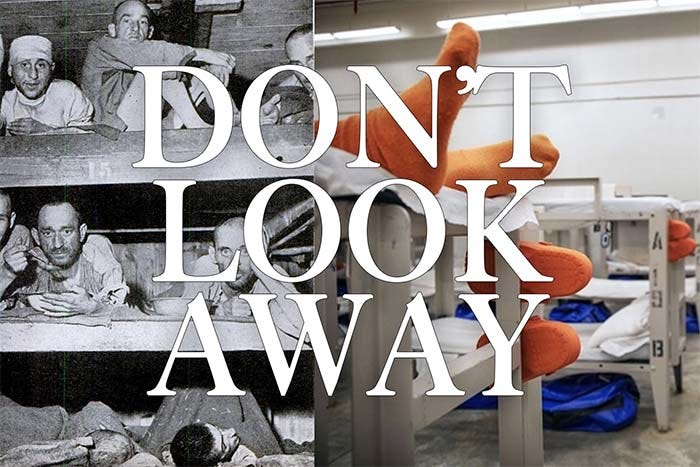
The Words We’re Afraid to Use
Most Americans hear “concentration camp” and think exclusively of the Holocaust—which makes the term almost impossible to apply anywhere else. That’s a problem. When we can only name something at its most extreme, we lose the ability to recognize it in earlier and current forms.
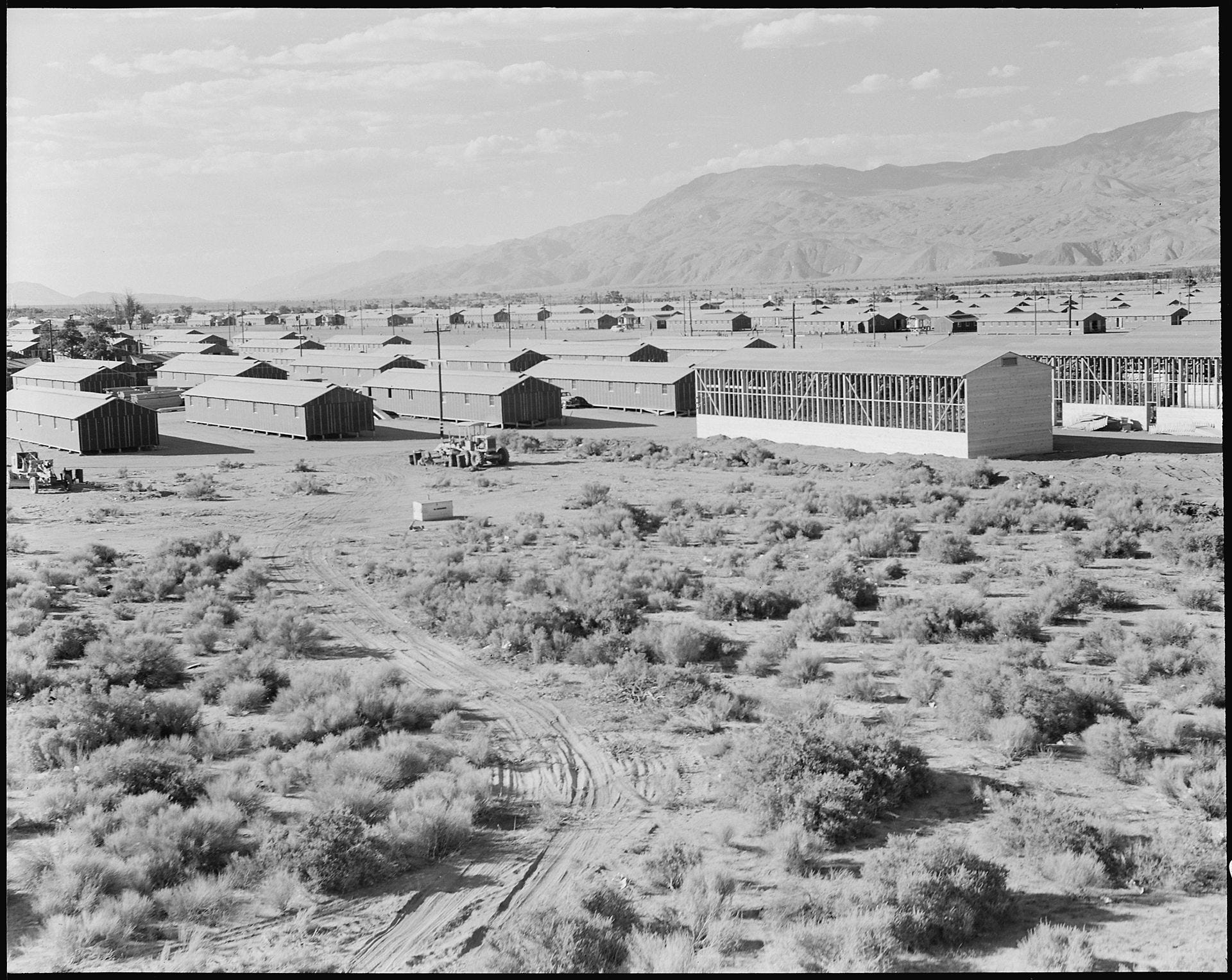
The term predates the Third Reich by decades. Britain ran concentration camps in South Africa during the Boer War (1899–1902). The United States ran them during World War II, incarcerating 120,000 Japanese Americans by ancestry alone—a policy Congress formally apologized for in 1988.
Historian Andrea Pitzer defines them precisely: facilities where civilians are detained en-masse without individual trial, targeted by group identity, under conditions that punish rather than simply confine. No due process. Group-based targeting. Degrading conditions.
By that definition, human rights organizations have concluded that the current U.S. immigration detention system qualifies. This is not hyperbole. It is a historical classification. And the reason to name it accurately is that history shows us, with brutal clarity, what happens when we refuse to.
Who Is Cashing In
The U.S. now operates the world’s largest immigration detention system. Since January 20, 2025, ICE has been detaining over 50,000 people daily—with projections approaching 100,000 as new facilities open. According to ICE’s own data, nearly three in four people currently in detention—73.6 percent—have no criminal conviction. Of those who do, many were convicted of nothing more serious than a traffic violation.
Many detainees are asylum seekers doing exactly what U.S. and international law permits: presenting themselves and asking for protection. Many are children — the number of minors in ICE detention has increased more than sixfold since January 2025, with over 170 children held on an average day, and more than 1,300 held longer than the court-established limit for child detention. They are held because they can be.
Somebody is making a great deal of money from this.
Two corporations—GEO Group and CoreCivic—dominate the market through billions in annual ICE contracts. In FY2024, ICE spent $3.4 billion on detention. GEO Group’s stock doubled after Election Day 2024; its market cap now exceeds $4 billion. These companies have spent millions lobbying for the policies—mandatory detention minimums, restrictions on alternatives, new facility construction—that keep their beds filled. They are not neutral contractors. They are profit-seeking enterprises whose returns depend on more people locked up for longer.
The extraction doesn’t stop at the federal contract. It goes inside the cells.
ICE’s “Voluntary Work Program” pays detainees $1 a day—13 cents an hour—to cook, clean, and maintain the facilities holding them. At least 60,000 people cycle through it annually. In some GEO facilities, there are no outside janitorial or kitchen staff at all. Detainee labor accounts for roughly a quarter of GEO’s net profits.
“Voluntary” is doing heavy lifting there. Federal lawsuits allege GEO deliberately maintained substandard conditions and inflated commissary prices so detainees had to work to afford soap and phone minutes. Those who refused were threatened with solitary. A CoreCivic kitchen worker in Georgia, injured on the job, was told by a guard he’d be sent to solitary if he didn’t show up for his next shift.
Washington State won a unanimous federal jury verdict against GEO over the $1/day wages in 2021. GEO’s response was to suspend the program at its Tacoma facility entirely—stripping detainees of even that dollar rather than pay minimum wage. The appeal is before the Supreme Court this term.
Here is the detail that ties this whole story together: detainees are not classified as employees. No W-2. No employer payroll taxes. No federal or state income tax withheld. GEO collects $157 per person per day from your tax dollars while the people doing the actual work earn less than a dollar with zero public tax benefit.
The same immigrants who, when free, paid Social Security, Medicare, and income taxes they were legally barred from ever collecting—are now, once detained, doing equivalent work for pennies, generating nothing for the public and everything for shareholders.
They arrested the workers. They kept the work. They stopped paying taxes on it.
What You’re Actually Paying For
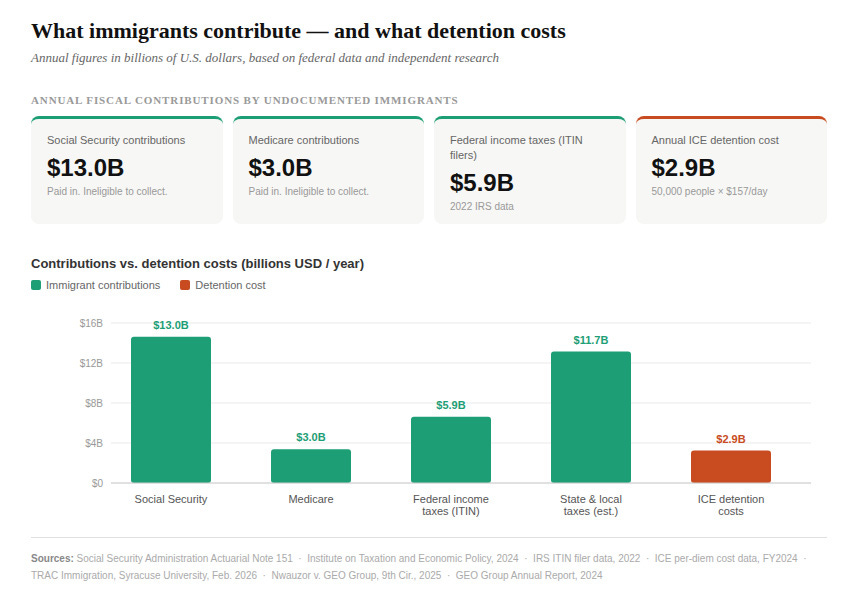
At $157/day per detainee, 50,000 people costs nearly $2.9 billion a year—just for detention, before enforcement operations, deportation flights, or legal proceedings. Proposed mega-centers housing 30,000–50,000 people each would add billions more in construction and ongoing operations.
Set that against what’s being lost. Undocumented immigrants contribute an estimated $13 billion annually to Social Security and $3 billion to Medicare—programs they are legally prohibited from collecting. ITIN filers paid $5.9 billion in federal income taxes in 2022 alone. They pay into unemployment insurance funds they can’t claim. When ICE removes workers from a community, local businesses close, school enrollment drops, and per-pupil funding falls for everyone’s children.
The economic case for mass detention doesn’t survive contact with arithmetic. What detention costs dwarfs what processing cases would cost. What’s lost in tax base when workers disappear dwarfs any theoretical savings. The endpoint of the $1/day model is a captive workforce generating nothing for the public, operated at full public expense, returning profits to shareholders.
We are paying an enormous sum to damage our own economy and calling it policy.
Whose Backyard, and Who Decides
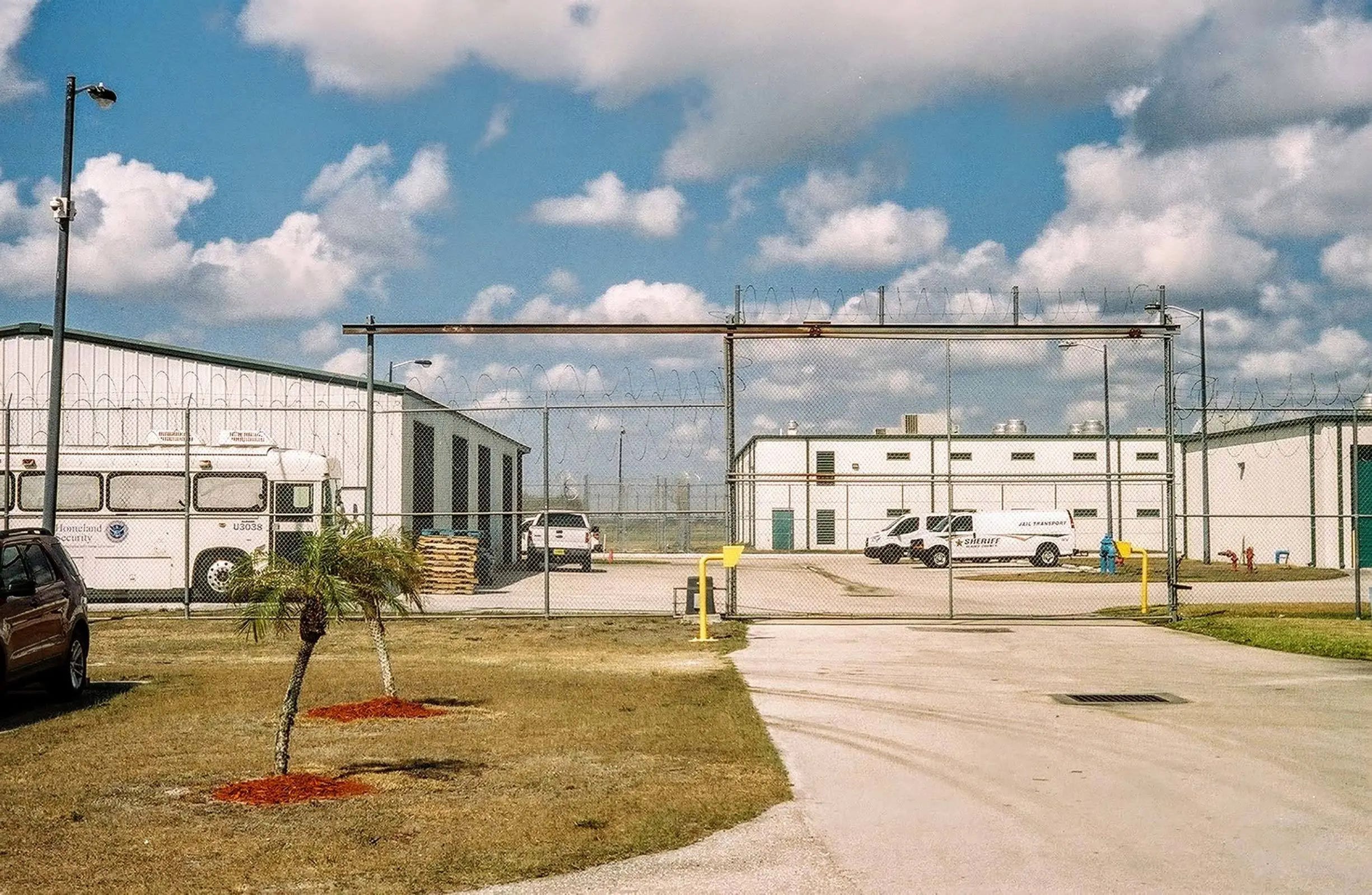
The mega-centers aren’t planned for Scottsdale or suburban Virginia. They’re being sited in places that lack the political power, legal infrastructure, and media attention to resist. The pitch is economic development—jobs, local contracts, a tax boost. It doesn’t hold up.
Federal contracts flow to GEO and CoreCivic, not local economies. Guards are often brought in from outside the region, adding demand for housing and schools the host community must absorb. The profits leave the county. And the same federal government offering this “development deal” signed the One Big Beautiful Bill Act on July 4, 2025—containing the largest Medicaid cuts in the program’s history, an estimated $1.02 trillion over ten years. The AHA projects rural hospitals will lose $50.4 billion in federal Medicaid spending by 2034; 1.8 million rural residents will lose coverage. More than 300 rural hospitals are already at immediate risk of closure. Forty-four percent are running in the red.
Now site a facility holding tens of thousands of people in a county whose hospital is one bad quarter from closing. Detainees in overcrowded, unsanitary conditions develop health crises. The private contractor—financially incentivized to minimize care—delays, denies, documents. When someone requires real treatment, they go to the local emergency room. The uncompensated care bill lands on a rural hospital already drowning.
The community gets the strain. GEO gets the contract.
If the conditions inside these facilities are acceptable—why are journalists denied access? Why are lawyers turned away? Why are there no cameras?
Because the people running this system know what it looks like. They are counting on the rest of us not to look.
What Is Actually Happening Inside
In December 2025, Amnesty International released a report on “Alligator Alcatraz” (formally the Glades County Detention Center) and Krome in Florida. Its director for the Americas stated:
These findings confirm a deliberate system built to punish, dehumanize, and hide the suffering of people in detention.
A formerly detained person described conditions:
We’re locked up in 1,000-square-foot cages. There are 32 people in each cage, and 8 cages inside the tent. The lights are like stadium lights; they’re always on. It’s very cold. There are a lot of mosquitos.
The report found overflowing toilets with fecal matter seeping into sleeping areas, 24-hour stadium lighting, inadequate food and water, and medical care that was “inconsistent, inadequate, or denied altogether.” Detainees were shackled for any movement outside their cages. Some described “the box”—a 2-by-2-foot outdoor punishment enclosure, feet restrained to the ground, for hours at a time.
Amnesty’s conclusion: conditions amount to cruel, inhuman, and degrading treatment. Use of the box and prolonged solitary confinement amount to torture.
These are not political allegations. They are documented findings consistent with reporting from journalists, attorneys, and medical professionals—describing conditions that violate U.S. law, international treaties this country has ratified, and any reasonable standard of human decency.
A System Built to Make People Disappear
The facilities are only part of the picture. What happens to people once inside—where they go, who can find them, what rights they can exercise—is the other part. The answer: nowhere traceable, nobody, none.
ICE routinely transfers detainees across state lines, severing them from attorneys and pending court cases. Lawyers show up to visit clients who were moved overnight—sometimes with no forwarding information. Congressional oversight visits have been physically blocked. The administration’s position is that these facilities aren’t subject to legislative scrutiny the Constitution contemplates. Courts have mostly disagreed—but defiance of court orders has become its own pattern.
In March 2025, the administration moved people out of the country entirely. Invoking the Alien Enemies Act of 1798—last used to intern Japanese Americans—it sent over 280 people to CECOT, El Salvador’s mega-prison, in hours. This happened in defiance of a federal court order. Judge James Boasberg had issued a restraining order; the planes flew anyway.
The evidence of gang membership in most cases was a tattoo. Anyelo was 19. His tattoo was a rose with $100 bills for petals—”something most teen boys would think was cool,” his sister told investigators. He had an asylum hearing scheduled for 2026. He went to a routine ICE check-in on January 31, 2025, and never came home. He turned 20 inside CECOT.
The legal structure was deliberate: El Salvador said the men weren’t held under Salvadoran law—CECOT had been leased to the U.S., and the U.S. bore sole responsibility. The U.S. said it had no control and couldn’t seek their release. The men were in a legal no-man’s-land: held in a foreign prison at U.S. direction, beyond the reach of U.S. courts, unable to contest any allegation. El Salvador received $4.7 million for the arrangement.
Most men were returned to Venezuela in July 2025—not to the United States where their lives were, but as pawns in a prisoner exchange. Some had fled Venezuelan persecution. They were sent back to it. Human Rights Watch documented eleven cases and interviewed twenty relatives. Not one detainee had appeared before a judge. Families learned their relatives were alive from photographs President Bukele posted on social media.
Judge Boasberg found probable cause to hold the administration in criminal contempt. The administration has treated that finding as it treats all judicial oversight: an obstacle to be managed, appealed, and ignored.
The Fifth Amendment says no person shall be deprived of liberty without due process. The Fourteenth extends equal protection to any person within U.S. jurisdiction. Courts have held repeatedly that these apply in immigration proceedings. The administration’s position is that by moving people fast enough and far enough into jurisdictional gray zones, it can make those protections meaningless in practice while denying it has violated them in principle.
That is not a legal theory. It is a disappearing act.
How Ordinary People End Up Here
None of this was sudden. The belief that a real atrocity would be obvious—that we’d recognize it and respond—is one of the most reliable forms of denial history has produced.
The U.S. has been moving through these steps for decades: Japanese American internment. INS border camps in the 1980s and 90s. Post-9/11 detention of Muslim men without charge. Family separation in 2018. Remain in Mexico. The termination of CBP One in January 2025. Each step expanded who could be detained, under what conditions, for how long, with how little accountability.
Germany’s Third Reich didn’t announce its destination in 1933. It moved incrementally—normalizing persecution through law, propaganda, and social pressure. It gave ordinary people permission to look away by framing cruelty as security and suffering as deserved. It worked not because Germans were uniquely monstrous, but because the mechanisms it exploited operate in every human society.
The rationalizations today are structurally identical. Detention deters migration (evidence: thin). Detainees are threats (most: no criminal record). Conditions are temporary (”temporary” facilities have operated for years). It follows the law (the conditions almost certainly violate it). These aren’t arguments. They are permission structures—ways of making indifference feel like reason.
The scale, the explicit embrace of cruelty as feature rather than flaw, and the removal of procedural safeguards distinguishes this moment from earlier iterations. This is not drift. This is design.
The Magazine in the Drawer
Years ago I found a copy of Life magazine from May 1945—the week my father was born—in a dusty bookstore. I was going to give it to him as a birthday gift. I started flipping through it on the way out the door.
The cover featured three men with hollow, haunted expressions. Inside, buried on page 32 behind glossy advertisements and cheerful features about American life, was a spread titled “Atrocities: Capture of the German Concentration Camps.” Photo after photo: skeletal figures, scenes of torture, death everywhere. But the image I couldn’t shake was a small boy—knobby-kneed shorts, sweater over a collared shirt—strolling down a road lined with corpses. The caption used the word “strolls.” As if the bodies were simply the landscape. As if this were the most ordinary thing in the world.
I never gave my father that magazine.
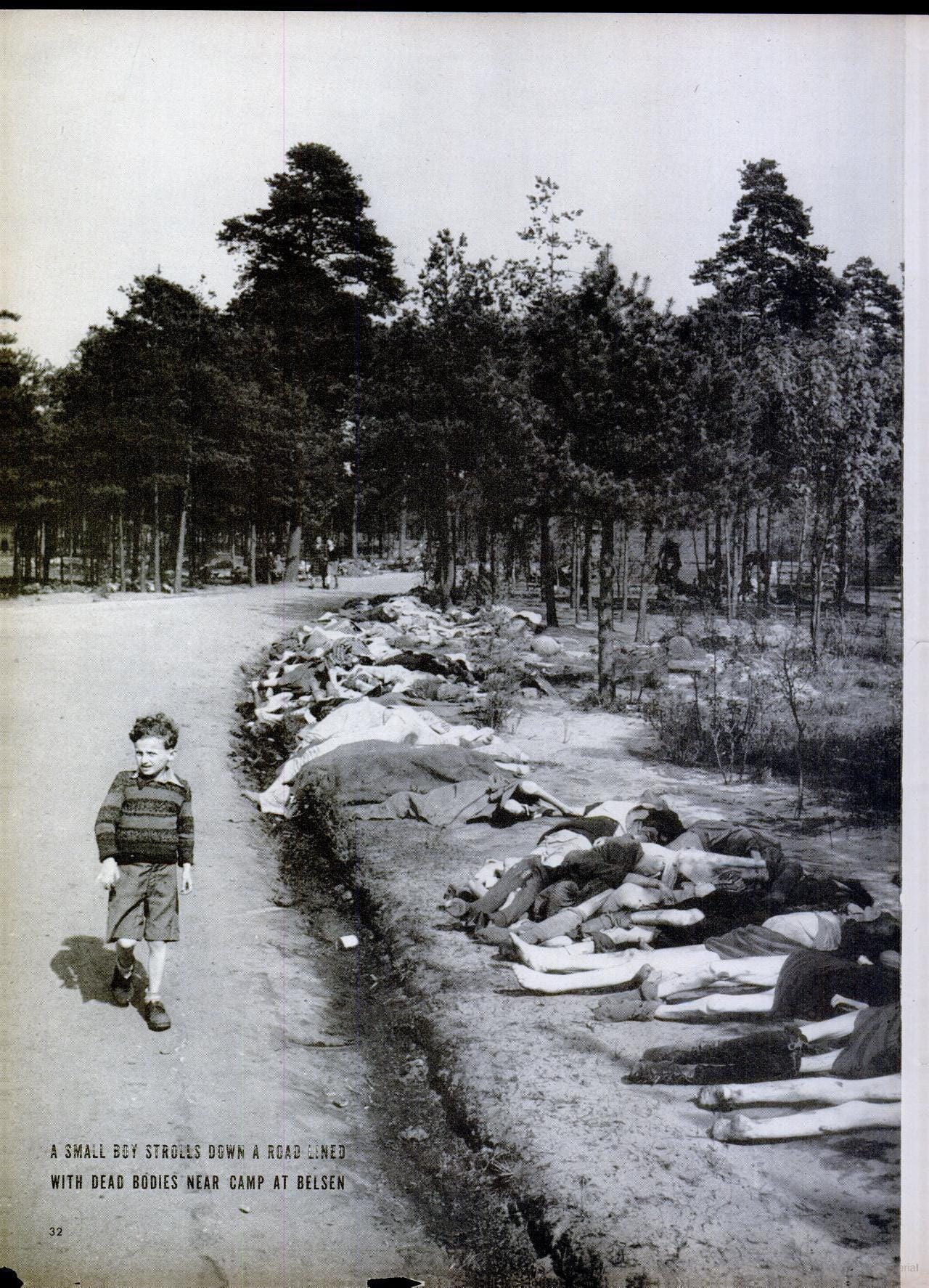
I have spent decades asking how ordinary people learn to walk past horror without flinching.
Reading the December 2025 Amnesty report, I think I finally understand. They learn gradually, through repetition, in a system that rewards not noticing. That boy didn’t decide to be indifferent. He was shaped by twelve years of a society taught to treat certain people as less than people. He strolled because everyone around him did. Because strolling was what was expected.
We are not twelve years in. We are nine. The first executive orders targeting Muslims came in January 2017. Family separation came in 2018. “Remain in Mexico” came in 2019. Each year, the circle of who could be disappeared grew wider and the consequences of noticing grew steeper. The machinery we are watching now was not built overnight — it was built incrementally, the same way it has always been built, in every country where it has been built.
Nine years is not twelve. There is still time to choose differently. But the window that felt wide open in 2017 is narrower now. And it gets narrower every time we decide that what we are seeing is not our problem.
Read the report. Learn who is profiting. Call your representatives. Pay attention.
The information exists. The only question is what we choose to do with it.
References & Further Reading
Amnesty International. “Torture and Enforced Disappearances in the Sunshine State: Human Rights Violations at ‘Alligator Alcatraz’ and Krome in Florida.” AMR 51/0511/2025, 4 Dec. 2025. Full report (HTML) | PDF
Knauth, Percy. “Atrocities: Capture of the German Concentration Camps Piles Up Evidence of Barbarism that Reaches the Low Point of Human Degradation.” Life, 7 May 1945, pp. 32-37. life.com/history/behind-the-picture-the-liberation-of-buchenwald-april-1945
Pitzer, Andrea. One Long Night: A Global History of Concentration Camps. Little, Brown and Company, 2017.
Goss, Stephen, Alice Wade, J. Patrick Skirvin, Michael Morris, K. Mark Bye, and Danielle Huston. “Effects of Unauthorized Immigration on the Actuarial Status of the Social Security Trust Funds.” Actuarial Note No. 151, Social Security Administration Office of the Chief Actuary, Apr. 2013. ssa.gov/oact/NOTES/pdf_notes/note151.pdf
Institute on Taxation and Economic Policy. “Tax Payments by Undocumented Immigrants.” ITEP, 2024. itep.org/undocumented-immigrants-taxes-2024
American Hospital Association. “Rural Hospital Medicaid Impact Analysis.” AHA, 2025. aha.org/advocacy/rural
KFF (Kaiser Family Foundation). “How the ‘One Big Beautiful Bill’ Would Affect Rural Medicaid.” KFF, July 2025. kff.org/medicaid
Human Rights Watch. “’They Just Disappeared’: U.S. Deportations to El Salvador’s CECOT Prison.” HRW, 2025. hrw.org/report/2025
TRAC Immigration (Transactional Records Access Clearinghouse, Syracuse University). “Immigration Detention Quick Facts.” Data current as of 7 Feb. 2026. tracreports.org/immigration/quickfacts
TRAC Immigration. “Taking Stock: Trump Administration Record on Detention and Removals.” tracreports.org, Nov. 2025. tracreports.org/reports/767
Henderson, Tim. “An Ever-Larger Share of ICE’s Arrested Immigrants Have No Criminal Record.” Stateline, 12 Dec. 2025. stateline.org/2025/12/12/ice-immigrants-no-criminal-record
Nwauzor v. The GEO Group, Inc., No. 21-36024. United States Court of Appeals for the Ninth Circuit. 16 Jan. 2025 (panel opinion); 13 Aug. 2025 (en banc denial). cdn.ca9.uscourts.gov — August 2025 opinion (PDF)
“GEO Group Seeks U.S. High Court Review of Immigration Detainee Class Wage Ruling.” Mealey’s Litigation Report, 14 Jan. 2026. mealeys.com/articles/2430276
“Supreme Court Skeptical Over ICE Contractor’s $1-a-Day Pay Case.” Newsweek, 12 Nov. 2025. newsweek.com/supreme-court-geo-group-pay-case-11032718
Brennan Center for Justice. “Private Prison Company Seeks New Hearing on Wages for Immigrants in Detention.” brennancenter.org, 2025. brennancenter.org — detainee wage hearing
“Tacoma Detention Center Must Pay for Violating Minimum Wage Law, Appeals Court Affirms.” Washington State Standard, 13 Aug. 2025. washingtonstatestandard.com/2025/08/13/tacoma-detention-center-wages
“Preemption, Labor, and Movement Strategy: Lessons from Nwauzor on Detention Capitalism.” Harvard Law Review Blog, 4 Aug. 2025. harvardlawreview.org/blog/2025/05/preemption-labor-nwauzor
“More than a Jail: Immigrant Detention and the Smell of Money.” Vera: In Our Backyards Stories. July 5, 2018. https://www.vera.org/in-our-backyards-stories/glades-county-more-than-a-jail
Excellent, Dani.
Shared on Facebook and restacked. Well done, Dani.